The Sovereign
Asset
The Smartphone Disruption — The Hollowing of the Middle
The introduction of the smartphone, followed by the ubiquitous proliferation of the Apple Watch, is often erroneously cited by casual observers as an existential threat to traditional horology. In reality, it functioned as an evolutionary filter. The digital disruption did not kill the watch; it killed the utilitarian, entry-level “fodder.” By stripping away the basic use-value of mid-tier timepieces, the smartwatch catalyzed a brutal “K-shaped” bifurcation of the market. This divergence successfully eradicated the vulnerable middle market while simultaneously liberating the high-end mechanical watch to ascend as a pure, hyper-concentrated luxury asset.
Digital Cannibalization and the “Filter Effect”
Before the smartphone era, watches occupying the $500 to $2,000 price bracket relied on a fragile blend of accessible prestige and functional utility. The Apple Watch destroyed this equilibrium by offering superior biometric tracking and data optimization. It rapidly transitioned from an “accessory of an accessory” into the dominant digital interface of the human wrist. It is important to be precise, though, about which tier of the market was affected. The iPhone and Apple Watch have impacted the low-end and middle-tier markets far more than the high end. At the high end, smartphones have arguably been an asset: in major cities, the owner of a six-figure timepiece can simply check the time on their phone or wrist-worn Apple Watch, sparing the security risk of openly displaying their watch when asked.
Smartwatches operate strictly on the tech sector’s principle of “Obsolescence-by-Design.” They are closed “Black Boxes” engineered as terminal assets with finite lifespans dictated by lithium-ion degradation and software update cycles. An outdated smartwatch is never a vintage treasure; it is electronic waste. By monopolizing the wrist for pure utility, the smartwatch rendered standard mid-tier quartz and mechanical pieces functionally redundant. It filtered the market, forcing consumers to either choose a smartwatch for daily optimization or trade up to an ultra-high-end “Blue-Chip” mechanical asset.
The Scissors Effect: The Volume vs. Value Paradox
This technological filtering triggered what financial analysts identify as the “Scissors Effect”, a multidecade macroeconomic divergence where total Swiss export volumes plummeted while average export values soared. An important caveat: that collapse in export volume cannot be attributed to smartphones alone. The escalating value of the Swiss franc over the same period drove up Swiss production costs significantly — a structural pressure independent of digital disruption.
Historical data exposes this statistical rupture. In the year 2000, Switzerland exported roughly 29.7 million units, generating CHF 9.3 billion. By 2025, unit volume had collapsed to a multidecade low of 14.6 million units (a 51% decline from the 2011 peak). However, over that same period, total export value nearly tripled to CHF 25.6 billion. Consequently, the implied average price of a Swiss watch skyrocketed by 460%, moving from approximately CHF 313 to CHF 1,753.
The HNWI Citadel and the Winner-Takes-All Dynamic
The collapse of volume and the explosion of value confirm the industry’s strategic retreat into a “Winner-Takes-All” citadel, tailored exclusively to High-Net-Worth Individuals (HNWIs). The market has successfully hollowed out the enthusiast middle class.
This polarization is codified in the “89% Rule”: in the contemporary market, watches priced above CHF 50,000 (USD $62,000), representing a mere 1.4% of total production volume, capture an astounding 89% of the industry’s total growth. Horological expert Tom Bolt identifies this barrier to entry as a tenfold escalation in signaling cost. The relative market positioning and “standing on the wrist” that could be acquired for £15,000 two decades ago now demands an expenditure of £250,000. In this environment, capital has superseded simple enthusiasm, transforming the act of purchasing from a standard retail transaction into a disciplined “allocation” on a wealth manager’s balance sheet.
The Psychology of the Wrist: Disposable Interruption vs Sovereign Silence
The real transformation is psychological. In the age of constant digital noise, the mechanical watch has become the last sanctuary of sovereign silence. A smartphone or Apple Watch delivers disposable interruptions. Notifications, vibrations, and algorithmic nudges that fragment attention and demand immediate response. The mechanical dial offers the opposite: a quiet, self-contained presence that does not interrupt; it simply exists. There is, of course, one elegant exception within the mechanical canon: the minute repeater. At a dinner table, rather than appear gauche by checking one’s wrist, the owner can simply activate the slide or button on the case and listen for the chimes — a discreet method of telling the time that no smartphone could ever match. This sovereign silence is the ultimate filter of intention. It signals that the wearer chooses to command time rather than be commanded by it.
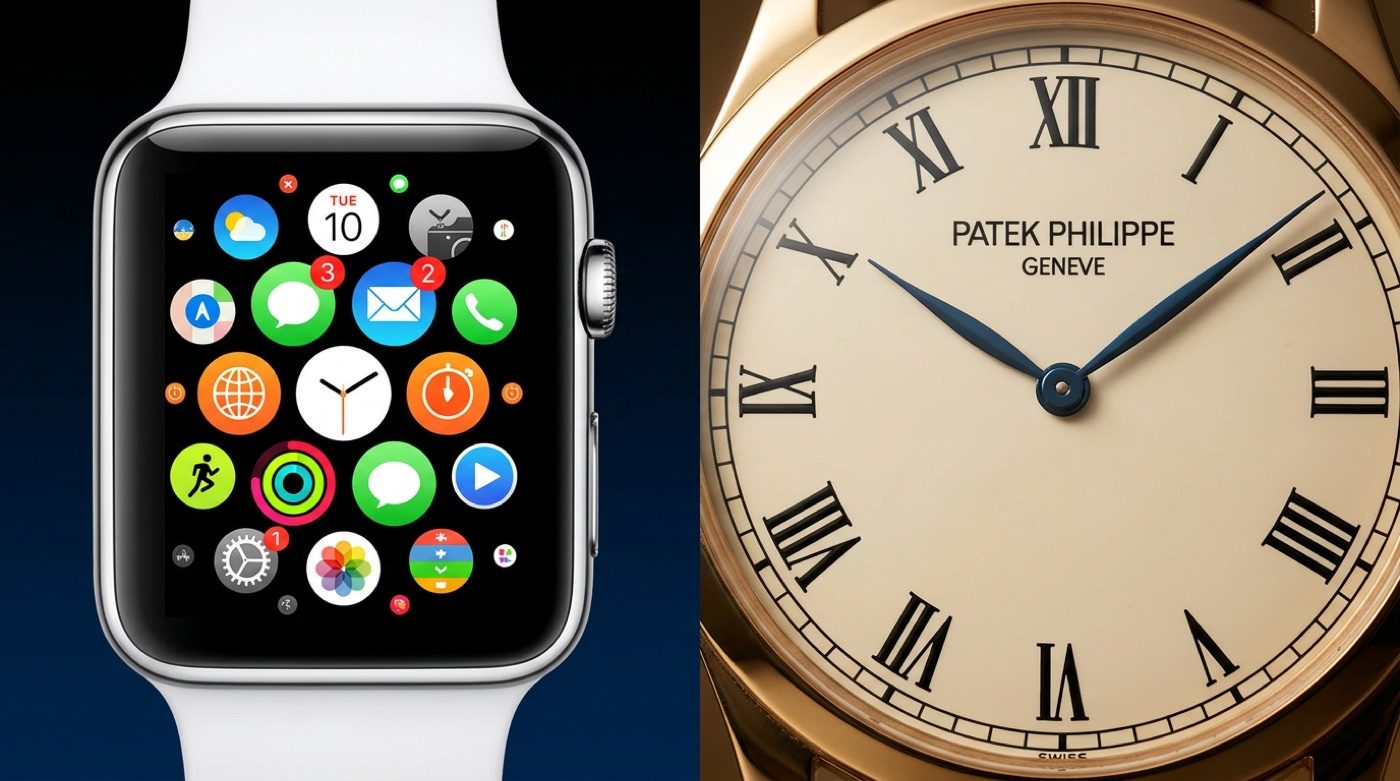
Tom Bolt’s “Video Killed the Radio Star” critique captures the tension perfectly. To be precise, the metaphor refers primarily to case materials, not movement materials. Audemars Piguet’s carbon-fibre — strictly, carbon — cases deteriorate over time in an almost corrosive manner; whereas a stainless steel case can be re-polished if scratched, carbon damage is permanent. Equally, brands such as Hublot have been observed to use unrefined or inappropriately finished components inside their watches, while marketing the pieces, to the uninitiated eye, as ultra-complicated and superbly finished. Modern “uber-lightweight” high-tech brands often replace the “honest metal” and manual competence of traditional watchmaking with aerospace materials and industrial efficiency. The result is a sleek, automated product that may be more precise in the moment but lacks the artisan nature of the past. The visible evidence of human effort, the repairable heartbeat that can be serviced centuries from now. The mechanical watch, whether a vintage Patek with hand-finished components or a Richard Mille with Total Resource Coordination, remains resolutely analog at its core. It is a Newtonian machine whose escapement still ticks with the same spirit that defined the trenches. The “glorious inefficiency” of the mechanical movement is no longer a weakness; it is the last authentic resistance against the digital age.
Intergenerational Permanence vs. The “Video Star”
By abandoning the commodified “Information” of basic precision, the high-end mechanical watch retreated entirely into the “Symbolic Luxury” pole. It became an “Architecture of Deep Time.” Unlike the sealed, terminal smartwatch, the mechanical movement is an “Open Machine” of pure Newtonian physics capable of infinite restorability. A master watchmaker can physically recreate a steel pinion from raw stock centuries from now, ensuring the machine functions as a permanent legacy asset that outlives its owner.
Ultimately, for the investor, the mechanical watch is no longer just a machine; it is a “prosthetic of competence.” Wearing a mechanical monument signals a deliberate “Analogue Resistance” against the frenetic standstill of the digital age, asserting that the wearer commands his own time rather than being optimized by it. The Apple Watch did not destroy the industry; it simply cleared the stage for this ultimate Veblen good to dominate. In an age of digital noise, the mechanical watch is the ultimate filter of status and intention.
The Financialization of Horology — The Watch as an Asset Class
The 2020s mark the definitive institutionalization of horology. The mechanical watch has completed its transition from a discretionary enthusiast hobby into a disciplined Alternative Tangible Asset (ATA). This structural shift is characterized by the entrance of Family Offices, private equity, and wealth management firms deploying capital with the fiduciary rigor traditionally reserved for equities, fine art, or real estate. In this hyper-professionalized landscape, the market is governed by quantitative performance rather than aesthetic merit, positioning high-end timepieces as portable ledgers of wealth.
The New Industry Configuration: Volume Collapse and Value Concentration
To understand how this institutionalization functions in practice, one must examine the profound structural divergence of the modern market. Today, the market is defined by a ruthless hollowing out. The mimetic desire of the global elite has consolidated around an increasingly narrow apex, with just four titans, Rolex, Cartier, Audemars Piguet, and Patek Philippe, commanding a staggering 55% of total industry value. For historical context, Tom Bolt notes that twenty years ago a similar share of the global market was commanded by Rolex alone.
According to the 9th Annual Morgan Stanley and LuxeConsult Swiss Watcher report, the industry has reached a new configuration defined by an extreme volume-to-value paradox. Total Swiss watch exports have fallen to a multi-decade low of 14.6 million units, a 51% decline from the 2011 peak of roughly 30 million units. Despite shipping half as many physical watches, industry turnover has reached record highs of approximately CHF 26 billion. The implied average price of a Swiss watch has skyrocketed by 460%, rising from roughly CHF 313 to CHF 1,753.
This polarization is codified in the 89% Rule: watches priced above CHF 50,000, representing a mere 1.4% of total production volume, now generate 89% of all industry growth. The enthusiast middle market has been entirely cannibalized by digital disruption, forcing the industry to retreat into the ultra-high-end. For the global top 1%, a CHF 50,000 timepiece is not a discretionary purchase; it is a capital preservation tool, a high-density, portable asset used to anchor wealth in a volatile economic climate.
The Institutional Audit: Spreadsheets Over Loupes
The individual collector has been largely superseded by the Family Office as the primary architect of top-tier valuations. Wealth managers now frequently advise a 5% to 10% allocation to luxury collectibles within Ultra-High-Net-Worth (UHNW) portfolios. This institutional class evaluates assets not by the traditional metric of movement finishing, but via an “Institutional Audit” that prioritizes verifiable provenance, brand equity, and secondary market velocity.
Watches offer an elite mathematical diversifier, boasting a correlation coefficient with traditional equities significantly below 0.3. This is validated by the Knight Frank Luxury Investment Index, which recorded a 125% increase in watch valuations over the past decade. Data-driven platforms and algorithmic funds utilizing predictive analytics have brought absolute transparency to realized auction data. This strips away the emotional volatility of the primary market, allowing non-horological investors to deploy capital with algorithmic certainty.
The Brand as Central Bank
The dominant private houses, Rolex, Patek Philippe, Audemars Piguet, and Richard Mille, have transitioned from manufacturers into asset managers. Their primary product is no longer the measurement of time, but the stability and appreciation of their proprietary currency. It is also worth noting that under current UK rules wristwatches are treated by HMRC as wasting assets — machinery with a predictable life of under fifty years — and so no capital gains tax is levied on their appreciation: a meaningful structural advantage over comparable asset classes. The exemption applies to watches held for personal enjoyment; HMRC treats frequent buying and selling as taxable trading income. (This is general information, not tax advice.)
This shift is illustrated by the 9th Annual Morgan Stanley and LuxeConsult Swiss Watcher report. In 2025, Rolex achieved a historic CHF 11 billion in wholesale turnover while strategically reducing production volumes by roughly 2%. This calculated supply contraction was designed to protect the secondary market floor. Similarly, Patek Philippe operates under the mandate of a guardian of wealth, prioritizing generational value retention over unit volume. Patek Philippe are themselves active at auction, bidding to acquire significant historical pieces for the brand’s own museum. This activity quietly maintains the price ceiling for their own production and keeps the brand strong — a parallel, cynics might note, to the various ways the United States props up its share market.
To maintain their currency’s strength, these brands execute supply discipline through the allocation economy. The retail waitlist is a deliberate mechanism: consumers must be allocated a watch based on verified spend history, creating a significant barrier to entry that keeps capital within a vetted ecosystem. Certified Pre-Owned programs further allow brands to manage the float, intervening in the secondary market to stabilize price floors.
The result is a private signal of success and intentionality in a digital world. The mechanical watch functions as a tangible ledger of agency and trust that cannot be replicated, erased, or diluted by algorithms or fiat systems. For serious investors, owning these assets is no longer about timekeeping; it is about holding a physical, repairable instrument of sovereignty that preserves capital across generations and borders in an increasingly weightless financial landscape.
Controlled Scarcity as a Core Tactic
The dominant watch houses have shifted from competing on production volume to managing a deliberate state of permanent under-supply. Scarcity is now the primary driver of value retention and long-term appreciation. By engineering intentional friction in distribution and production, these brands have moved from a retail model to an allocation economy. This approach ensures that a small fraction of units (typically those priced above CHF 50,000) drives the majority of industry growth, turning the mechanical watch into a disciplined financial asset rather than a consumer good.
Rolex: The Theater of Unavailability
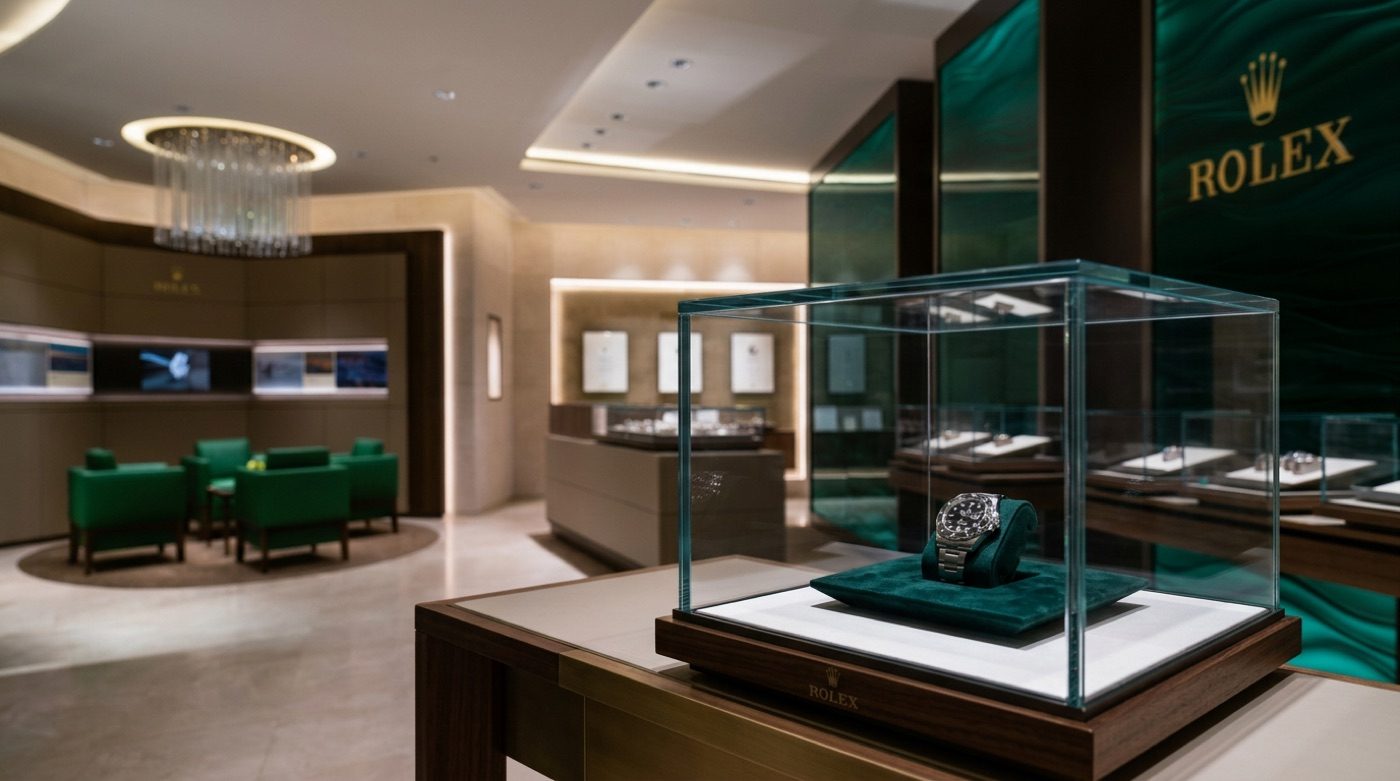
Rolex maintains market supremacy through a paradox of high overall volume and tightly controlled retail access. In 2025 the brand achieved record wholesale turnover of CHF 11 billion while reducing production volumes by approximately 2%, the first two-year decline in over two decades. This calculated contraction protects the secondary market floor. Showrooms function as “museums of desire,” displaying many pieces as exhibition-only to create psychological reactance. At the authorized-dealer level, scarcity is used as leverage: customers must build a verified spend history, typically by purchasing large amounts of spurious, non-named jewellery — often jewellery made by the retailer themselves — before they are allocated any Rolex watches at list price. It is a brutal tactic: the retailer recoups, in advance, some share of the upside the buyer will earn when the watch trades above retail. Tom Bolt has, on more than one occasion, seen jewellery purchased for this purpose that is worth roughly fifteen pence in the pound of its purchase price. The result is a private signal of success: the buyer has earned entry into the ecosystem, reinforcing Rolex’s position as the most liquid and stable currency in horology.
Patek Philippe: The Sovereign Gatekeeping Model
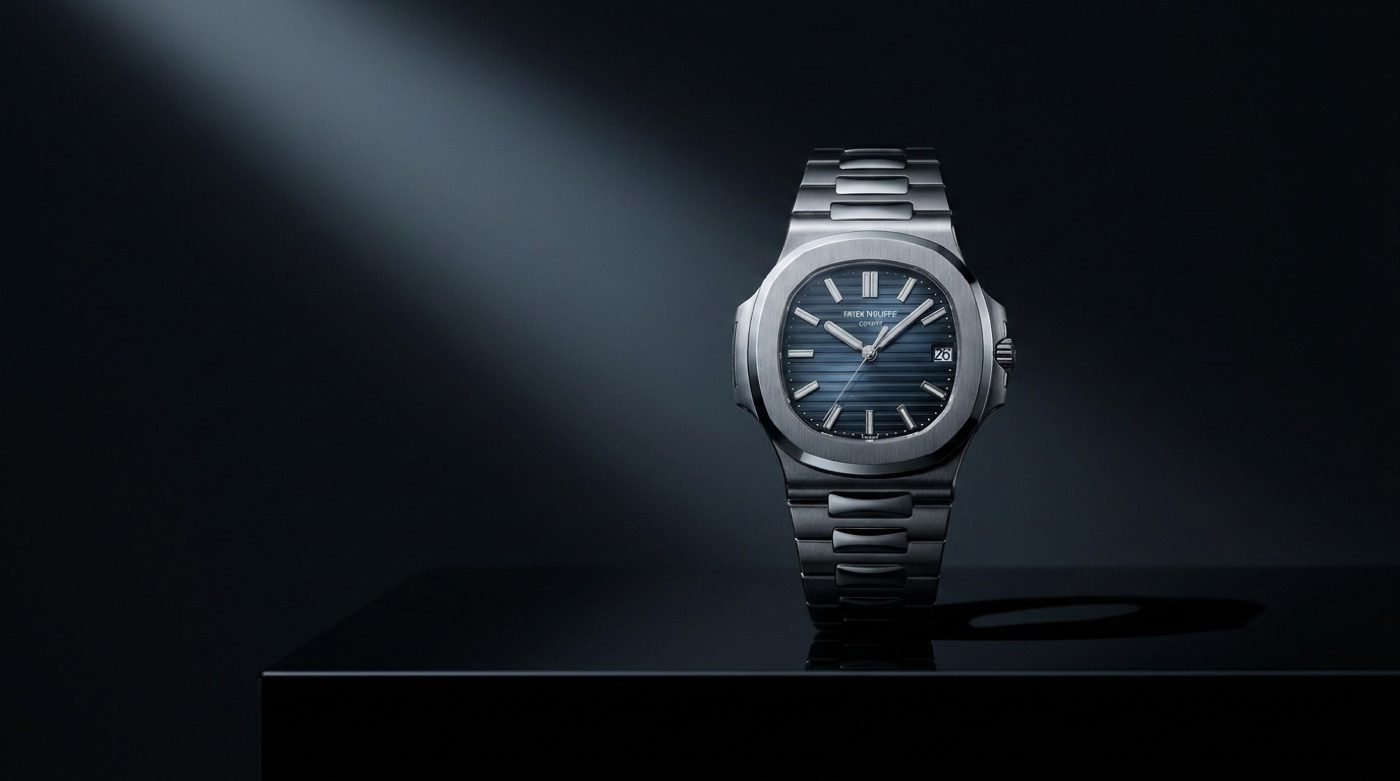
Patek Philippe treats scarcity as a form of gatekeeping to protect generational value. To purchase a grand complication, prospective buyers must submit a detailed dossier outlining their collection history and commitment to the brand. President Thierry Stern personally reviews these applications to ensure pieces go to long-term custodians rather than speculators. In a masterstroke of asset management, Patek discontinued the steel Nautilus 5711 at the absolute peak of its popularity. This move was designed to prevent any single model from dominating the brand’s image and instantly transformed existing 5711s into legacy assets with a permanent supply cap. By controlling allocation and discontinuing high-demand references, Patek maintains uniform global value and defends the secondary market from arbitrage or oversupply.
Audemars Piguet: Direct-to-Consumer Profiling

Audemars Piguet has aggressively moved to a 100% direct-to-consumer model through its AP Houses, replacing traditional multi-brand retail with a private-club environment. Commercially, this DTC pivot saves AP approximately 35% — the typical wholesaler’s mark-up on a watch, which sits between 30 and 35% today (it used to be closer to 40%). Sales teams act as behavioral profilers, assessing a client’s lifestyle and long-term alignment with the brand before offering allocation. This creates a high barrier to entry that filters out flippers in favor of genuine ambassadors. The strategy protects secondary-market velocity and ensures the Royal Oak, responsible for roughly 88% of sales, remains a signal of controlled access rather than commercial vulnerability. By owning the entire customer journey, AP manages scarcity as a relationship asset, reinforcing the watch’s role as a stable store of value.
Richard Mille: Inherent Scarcity Through Process

Richard Mille achieves scarcity through the inherent difficulty of its manufacturing process rather than artificial waitlists. It is worth recording, however, that Richard Mille is, in a meaningful sense, a game-changer in horology: the brand brought everyday usability — even in sporting life — to a category of watch that had previously been fragile and impractical to live with. Materials such as Carbon TPT and Grade 5 titanium are extremely challenging to machine, with scrap rates reaching 40% due to structural voids and tool wear. This “machining tax” creates a natural ceiling on output, typically 5,500 to 6,000 watches annually, the unique striations in each Carbon TPT case act as a fingerprint that enhances authenticity. The brand’s focus on process rarity justifies average selling prices exceeding $250,000 and positions its watches as high-alpha assets that deliver strong secondary-market performance without relying on retail allocation.
In each case, controlled scarcity is not a side effect of demand; it is a deliberate strategy that transforms the mechanical watch from a product into a managed financial instrument. By limiting supply and directing allocation, these houses protect long-term value, stabilize secondary floors, and ensure their products function as portable, high-density stores of wealth for the global elite. The result is a private signal of success and intentionality that cannot be replicated in a digital or mass-market environment. For the serious investor, this scarcity is the mechanism that converts craftsmanship into capital.
The RoV Dynamic: From Depreciating Utility to Sovereign Asset
Historically, luxury watches behaved like luxury automobiles: they were wasting assets that lost 20% to 40% of their value the moment they left the retail boutique. Today, the mechanical watch has completed its transformation into a disciplined alternative tangible asset. This shift is quantified in the Retention of Value (RoV) Dynamic, a metric used by wealth managers to evaluate high-end timepieces against traditional asset classes. The RoV measures how effectively a watch preserves and grows capital after purchase, turning what was once a depreciating consumer good into a high-density, portable store of wealth.
The financial decoupling is striking. Prior to 2015, a standard blue-chip watch such as the Rolex Submariner (ref. 16610) retailed for approximately $3,500 and traded on the fragmented secondary market at a discount, around $3,100. It behaved like a functional consumer good subject to standard used-asset depreciation. Following the smartphone disruption, the market experienced a scissors-effect divergence. Swiss export volumes plummeted while export value reached record highs of approximately CHF 26.7 billion. The enthusiast middle market has been eliminated, leaving the ultra-high-end as a concentrated sanctuary for capital preservation.
The Financialization Catalyst: Why Wealth Management is Driving Hyper-Inflation in the "Winner-Takes-All" Apex
The 2020s have transformed the mechanical watch from a high-status accessory into a disciplined alternative tangible asset. Family offices, private equity, and wealth management firms now allocate capital to high-end timepieces with the same fiduciary discipline applied to equities, fine art, or real estate. This institutional entry is the primary catalyst behind sustained price escalation at the apex of the market. Rather than chasing aesthetic merit or technical novelty, these investors evaluate watches through quantitative lenses: verifiable provenance, brand equity, secondary-market velocity, low correlation to traditional assets, and measurable retention of value. The result is a self-reinforcing cycle in which capital concentration at the top drives further appreciation, turning the watch into a portable ledger of wealth that offers both diversification and discretion in a digital world.
The mathematical case for inclusion is straightforward. Luxury watches maintain a correlation coefficient to the S&P 500 that consistently remains below 0.3, providing genuine diversification during periods when equities and bonds move in tandem. A six-year study from the EHL Hospitality Business School found that the watch market exhibits annual volatility of just 3.90%, materially lower than real estate, stocks, or bonds. By adding an asset with low correlation and low volatility, portfolio managers can shift the efficient frontier upward: achieving higher expected returns for the same level of risk or reducing drawdowns during macroeconomic shocks. The Knight Frank Luxury Investment Index recorded a 125% increase in watch valuations over the past decade, underscoring the asset class’s ability to deliver attractive risk-adjusted performance. For family offices seeking to protect capital across generations, a 5% to 10% allocation to carefully selected high-end watches has become a standard recommendation.
To operationalize these allocations, wealth managers apply an Institutional-Grade Retention of Value (RoV) Score that functions as a financial health check. It determines whether a watch is a short-term toy or a long-term tool for growing wealth. The score rests on three components.
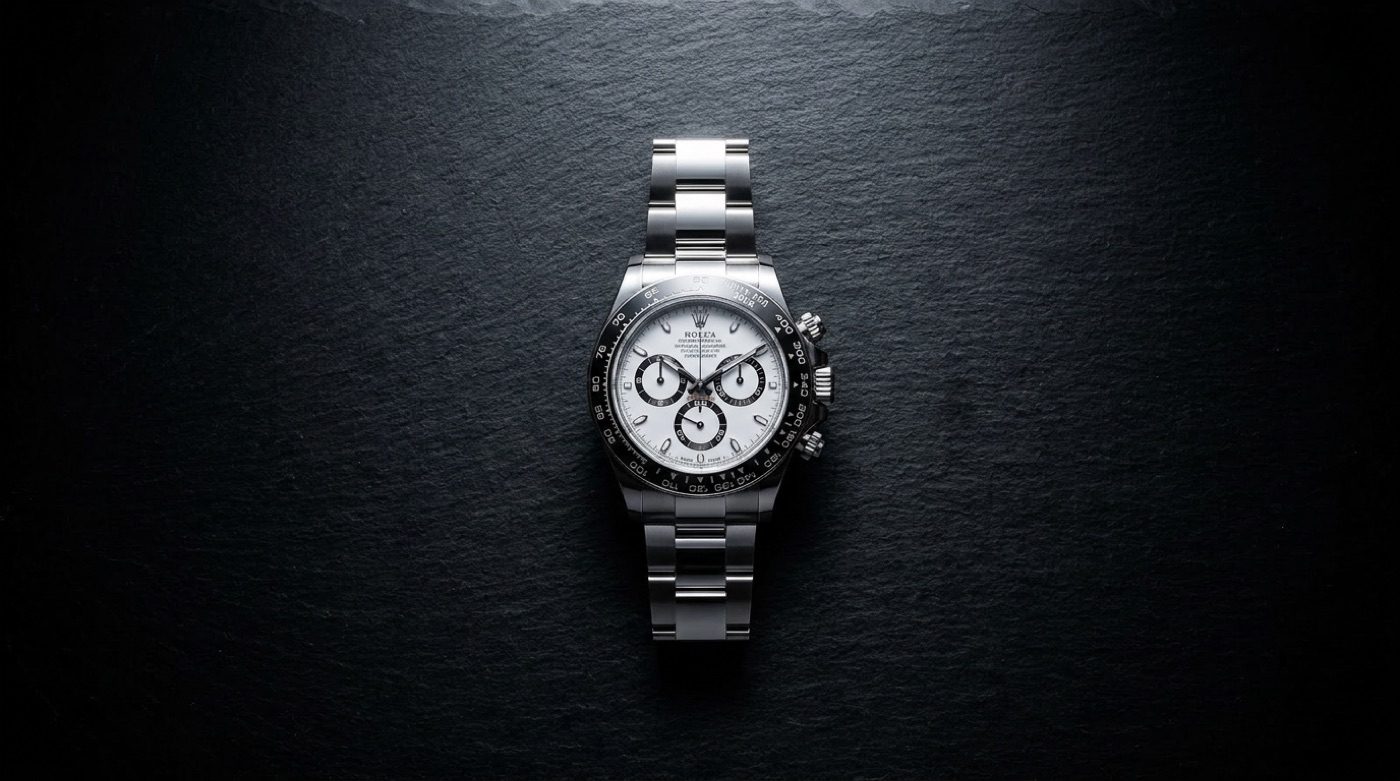
The first is raw yield: current secondary-market value divided by original MSRP. This shows basic appreciation. A Rolex Daytona 126500LN, for example, trades at approximately $31,500 against an original MSRP of $15,100, delivering a raw yield of roughly 208%.
The second is the provenance multiplier. A complete full set, original box, papers, and digital product passport, adds a 15% premium because it secures clear legal title. A naked watch incurs a 30% deduction, as the absence of documentation raises questions about ownership history. This 30% deduction has become standard market practice only in roughly the last six years, driven by an influx of new dealers who often cannot reliably distinguish a fake watch from a genuine one. What is frequently framed as a ‘provenance’ issue is, in practice, an authentication issue. The truth is that any watch can be taken to a Rolex boutique for inspection — though this is becoming harder, as the brands push buyers toward new purchases over pre-owned. By way of historical contrast: twenty years ago, Rolex operated a lost-and-stolen telephone line through which any serial number could be checked, with a reply within approximately ten minutes.
The third, and most critical, is secondary-market velocity: how quickly the watch can be converted back into cash. Assets that trade reliably within 24 to 48 hours are classified as cash equivalents and receive a 1.1× multiplier. When all three factors are combined for a high-grade Rolex or Patek, the Institutional RoV score can reach 240 or higher, confirming the watch as a sovereign, high-growth asset suitable for portfolio construction.
This RoV framework explains the 89% Rule that now governs the industry. Watches priced above CHF 50,000 represent a mere 1.4% of total volume but generate 89% of industry growth. This is because the mechanical watch offers tangible scarcity, verifiable history, and portability that no other asset class can match.
The Tenfold Escalation: Redefining the "Bang for Your Buck"
In the professionalized landscape of the 2020s, the financialization of the market has triggered what expert Tom Bolt identifies as a staggering tenfold escalation in the capital required to achieve meaningful horological standing. Bolt observes that the "bang for your buck" and "standing on the wrist" that a collector could procure for roughly $20,000 two decades ago, now necessitates an expenditure upwards of $250,000.
For the family offices that manage UHNW portfolios, these timepieces are no longer "consumer goods" to be used and depreciated. They have been repositioned as Sovereign Tokens: high-density, portable financial instruments that serve as wearable ledgers of wealth and "Handicaps" of secret knowledge.
The middle-market enthusiast who once could signal discernment with a high-quality, mid-tier mechanical watch has been functionally erased. By applying econometric investment data to balance overall portfolios, wealth managers have turned the top tier of horology into a "Hard Currency" market. To participate in the "sharp end" of the market today, collectors must recognize they are no longer competing with other hobbyists, but with fiduciary-led capital.
The Evolution of Mechanical Watch Seals: From Canton Moat to Brand Empire
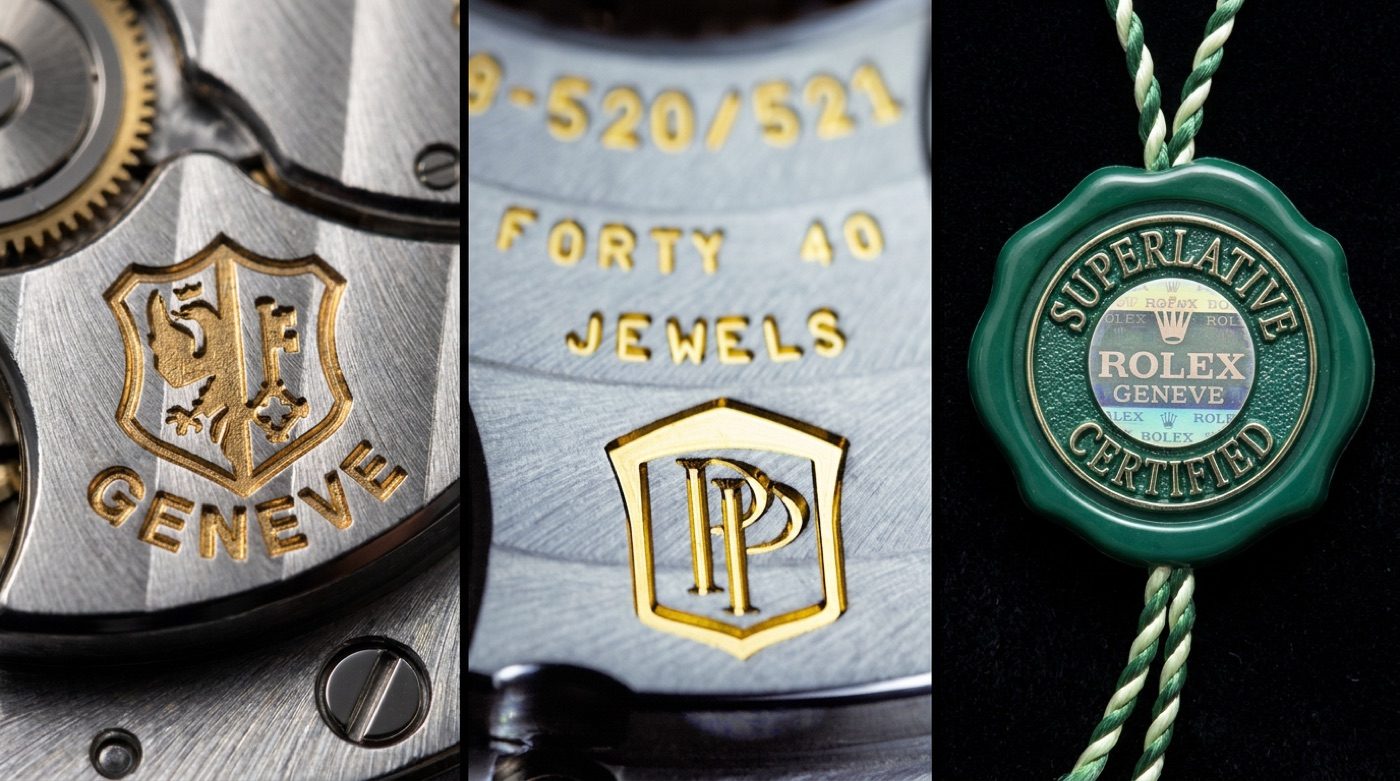
The history of mechanical watch seals is the history of horology’s quiet transfer of power. What began in 1886 as a Canton-level protectionist tool evolved into a system of brand-controlled standards that now define value in the secondary market. The Geneva Seal (Poinçon de Genève) was the original collective moat, designed to protect Geneva’s reputation for craftsmanship. By the 2000s, leading houses recognized that external certification limited their ability to differentiate. The result was a wave of proprietary seals that shifted authority from geography to brand. In 2026, these seals function as financial instruments: they verify quality, protect liquidity, and signal long-term value retention to institutional investors. The evolution reflects a clear strategic logic, brands that control their own certification control their own destiny.
The Geneva Seal was established on 6 November 1886 by the Grand Council of Geneva. It required full assembly, adjustment, casing, and hand-finishing within the Canton’s borders, with strict rules on materials and techniques such as anglage, perlage, and Côtes de Genève. The seal was never brand-exclusive; any Geneva-registered manufacturer could submit movements. For more than a century it served as the industry’s gold standard, commanding significant export premiums and reinforcing Geneva’s position as the center of fine watchmaking. Patek Philippe, Vacheron Constantin, and Audemars Piguet were its most prominent users, often accounting for the majority of seals granted. Other significant Swiss houses — IWC, Rolex and similar — were never positioned at this quality tier in any case. These were prolific, higher-volume brands operating at a lower price point, where the Geneva Seal was neither sought nor expected.
The “Velvet Revolution”: Patek Philippe and Brand Sovereignty
By the late 2000s the Seal had become a limitation for the most vertically integrated houses. Patek Philippe, having achieved full in-house production, viewed the Canton’s criteria as insufficient. The Seal focused on movement finishing and geographic origin but did not test the complete watch for reliability or precision under real-world conditions.
In 2009, Patek Philippe executed a strategic defection that fundamentally altered the industry’s power dynamics. After 123 years as the Geneva Seal’s most dominant adherent, the brand abandoned the hallmark to institute its own in-house standard. This move was driven by a clear perception that the Canton’s certification was being diluted. Newer entrants, including Cartier and Roger Dubuis, had begun designing movements specifically to meet the Seal’s aesthetic criteria, thereby extending the hallmark to pieces that did not align with Patek’s uncompromising standards for reliability and overall quality.
Patek argued that the Geneva Seal had become technically archaic. It focused primarily on the uncased movement’s finishing and geographic origin, with no requirement to test the complete watch for real-world performance. Philippe Stern articulated the brand’s position clearly: the Seal defined the finishing of components, which was fine, but it did not address the movement’s reliability or precision once cased. By creating its own proprietary seal, Patek transitioned from a regional participant in a collective standard to a sovereign “Horological Central Bank” that sets and enforces its own rules.
The new Patek Philippe Seal tests the entire cased watch with stricter criteria than the Canton ever required. It mandates daily rate accuracy of –3/+2 seconds across positions for high complications, requires a minimum of 30 metres water resistance, and demands exhaustive finishing standards, including internal angles polished to mirror perfection. It also includes a binding lifetime service commitment for every watch the brand has produced since 1839. This shift signaled that Patek’s brand equity had eclipsed the authority of the Swiss state. The brand was now the only institution qualified to validate its own quality and ensure its assets remained permanent stores of value immune to obsolescence. A few years after this defection, Patek further completed their vertical integration by ceasing to source chronograph movements from Lemania — having developed their own in-house chronograph movement.
The decision was a calculated exercise in vertical integration and narrative control. For over a century Patek had been the Seal’s greatest champion, often accounting for more than 95% of all seals granted. By walking away, it publicly declared that even the historic Canton standard was no longer sufficient for a house that had achieved full in-house mastery of every stage of production. The move protected the brand’s reputation from being associated with movements that met the minimum geographic and finishing requirements but fell short of Patek’s internal benchmarks. In doing so, Patek turned certification into a private language that only it could speak fluently, reinforcing its core positioning as the guardian of generational value.
For modern collectors, the Patek Philippe Seal functions as the ultimate wearable diploma in discernment. It signals that the wearer values a house that answers to no one but itself and treats the watch as a permanent asset rather than a disposable commodity. In the professionalized market of 2026, the Seal serves as a financial moat, ensuring the watch remains a high-density store of capital for generations. Collectors who pursue these pieces understand that true excellence is no longer granted by a Canton or an external committee; it is claimed by the house that dares to define it. In the end, the 2009 defection was not a rejection of tradition. It was the moment Patek Philippe taught the industry the only rule that still matters: the brands that control their own certification control their own destiny.
The Laboratory Empire — The Performance Cold War
The 2013 reforms to the Geneva Seal were the Canton’s direct response to Patek’s defection. Timelab, the independent laboratory that administers the Seal, updated the criteria to include full-watch testing, tighter rate tolerances, and enhanced reliability checks. The Seal remains geographically tied to Geneva, preserving its historic identity while adapting to modern performance demands. Yet the reforms could not reverse the broader shift: brands had learned that controlling certification is a more powerful tool than participating in a collective standard. It is worth recording, in this context, that Rolex’s authority in chronometry is much older than the contemporary Superlative standard suggests. In 1910, a Rolex became the first wristwatch in the world to receive the Swiss Certificate of Chronometric Precision — a heritage that the modern Superlative certification consciously extends.
The final evolution of horological certification moved beyond geographic protectionism and entered the domain of industrial performance warfare. This era, defined by the technical competition between Rolex and Omega, saw the sector shift from purely aesthetic guild standards to hyper-scientific laboratory mandates. For the Tier 1 investor, these seals function as meritocratic signals of technical superiority, contrasting with the inherited aristocratic sovereignty of the Patek Philippe Seal.
The Protectionist Genesis: The Geneva Seal vs. The Waltham System
The Geneva Seal was not originally conceived as a measure of accuracy, but as a protectionist response to the American Waltham System of interchangeable parts. In the late 19th century, the efficiency and precision of American mass production threatened to render the artisanal Swiss cottage industry obsolete.
By legally codifying fine watchmaking in 1886, the Grand Council of Geneva effectively turned the Canton into the Vatican of horology. However, this certification was historically purely aesthetic. It mandated mirror-polished screw heads and machined-from-solid springs but notably did not require chronometric accuracy. A watch could be a state-sanctioned masterpiece of hand-finishing while being a functional failure as a timekeeping instrument.
The 2012 Reformation: A Survival Pivot
The departure of Patek Philippe in 2009 created an existential crisis for the Geneva Seal. Realizing that an aesthetic-only hallmark was no longer sufficient for the modern, high-performance market, Timelab enacted a total overhaul in 2012. The body expanded the criteria to include cased-up testing for power reserve, water resistance, and rate accuracy. This was a defensive maneuver to prevent the total obsolescence of the regional guild in the face of sovereign brand standards.
The Laboratory Empire: METAS and Rolex Superlative (2014–2015)
As Patek Philippe retreated into aristocratic sovereignty, Rolex and Omega engaged in a performance cold war to define the new meritocratic standard.
The METAS Standard (Omega)
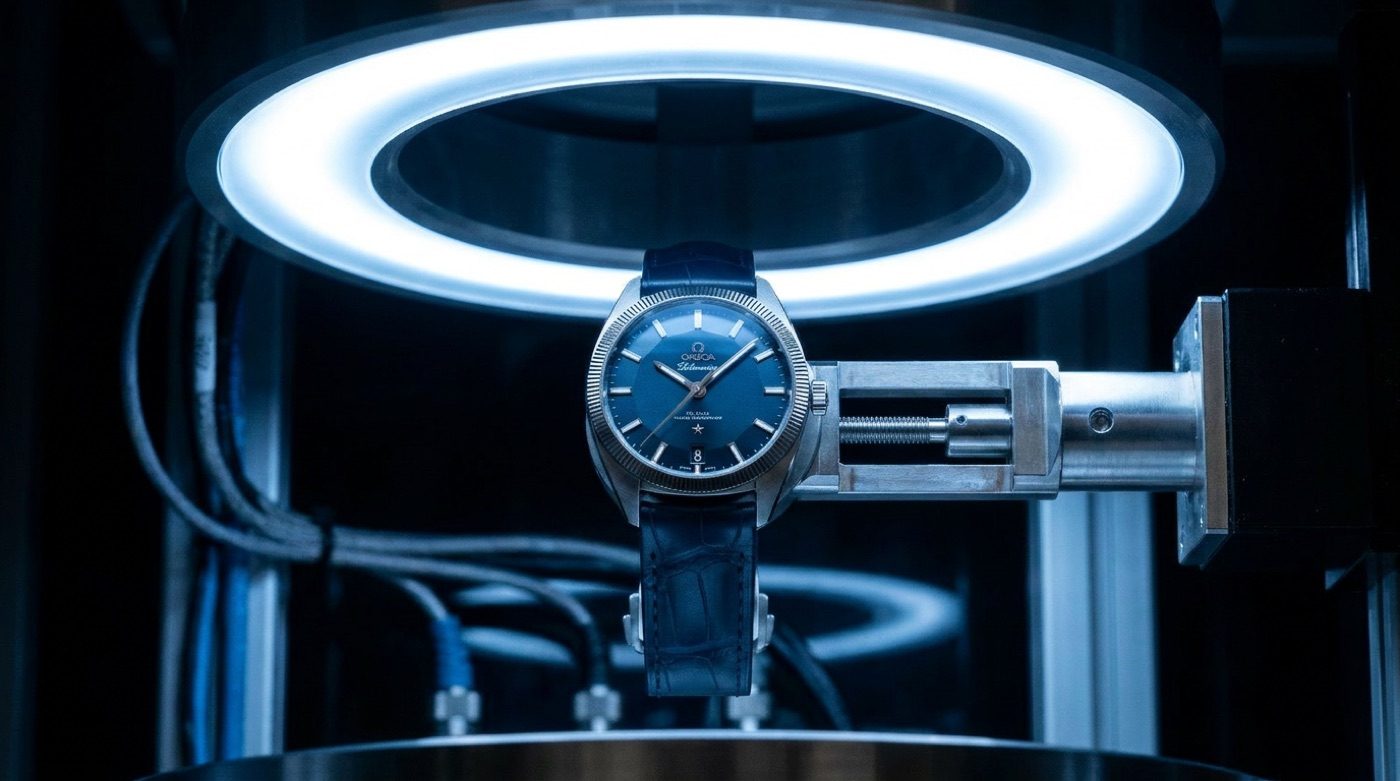
Launched in 2015 in partnership with the Swiss Federal Institute of Metrology, the METAS Master Chronometer certification established a new peak of technical transparency. The defining criterion is resistance to magnetic fields of 15,000 gauss (the strength of an MRI machine) combined with a strict 0/+5 seconds per day accuracy on the cased watch.
The 15,000 gauss threshold became Omega’s defining battleground because everyday magnetic fields had become a practical problem for mechanical watches. Smartphones, laptops, and airport security systems routinely expose watches to fields strong enough to disrupt traditional hairsprings. By engineering silicon balance springs and full-watch testing to withstand these forces, Omega positioned the Master Chronometer as a watch built for the realities of 21st-century life rather than the workbench. This was a deliberate claim to performance supremacy: the brand did not simply meet a standard; it created one that addressed a genuine modern vulnerability.
The Rolex Superlative Redefinition
Rolex responded by layering its own proprietary internal testing on top of the standard COSC certification. COSC (Contrôle Officiel Suisse des Chronomètres) is the official Swiss chronometer testing institute that certifies uncased movements for accuracy over 15 days in five positions and three temperatures, granting the chronometer title for –4/+6 seconds per day. Rolex takes these COSC-certified movements and subjects the fully assembled watch to additional in-house testing, resulting in the green Superlative Chronometer seal that signifies a tighter cased-up tolerance of –2/+2 seconds per day. Unlike the open-source transparency of METAS, the Rolex Superlative standard remains a sovereign black box, relying on the brand’s massive market equity to validate its performance claims.
This approach allows Rolex to benefit from COSC’s independent credibility while adding a layer of proprietary rigor that only Rolex can guarantee. It is a classic meritocratic power move: the brand starts with the accepted national baseline and then exceeds it under its own roof, creating a recognizable upgrade that collectors associate directly with Rolex engineering excellence. For modern collectors, the green Superlative seal signals proven performance that has been verified beyond the minimum industry requirement. It is the refined dominance of a house that does not need to invent a new standard, it simply perfects the one everyone already trusts. In the end, Rolex’s strategy reinforces its position as the most liquid and stable currency in horology, offering investors both independent validation and brand-controlled superiority.
Alternative Paths: Loyal Participation and Internal Rigor
While Patek Philippe chose full independence and Rolex and Omega pursued layered performance standards, other leading houses have taken more measured approaches. Vacheron Constantin and Audemars Piguet remain active participants in the Geneva Seal system, while select independents and specialized maisons have developed their own distinctive strategies. These paths illustrate the range of options available to brands seeking to balance historic prestige with modern control.
Vacheron Constantin, the oldest continuously operating watch manufacturer, practices a form of hybrid sovereignty. It continues to qualify many of its high-end movements and watches for the Geneva Seal, leveraging the Canton’s historic authority as a collective moat that protects traditional craftsmanship. At the same time, the brand layers its own stricter internal controls on top of the Seal’s requirements. For collectors, this combination signals unbroken aristocratic continuity. A Vacheron bearing the Geneva Seal represents refined confidence and a deliberate choice to stand within the historic tradition rather than break away to build a private standard.
Audemars Piguet follows a similar collaborative model. The brand has not defected from the Geneva Seal and continues to use it on qualifying pieces, particularly in its high complications and select Royal Oak references. AP layers the Seal with its own rigorous internal quality controls, signaling that it is a historic guardian of excellence that adds its own distinctive audacity to the traditional standard. This approach positions the Geneva Seal as a collaborative positional good, a shared badge of prestige that enhances rather than limits the brand’s identity.
Other notable adherents have adopted the Seal for strategic positioning. Chopard’s L.U.C collection uses the Geneva Seal on its highest-tier complications to establish unassailable horological legitimacy and distance the brand from its broader identity as a jewelry house. Roger Dubuis has become one of the most aggressive proponents, certifying 100% of its mechanical production with the Geneva Seal to reinforce its position as a specialist in extreme haute horlogerie.
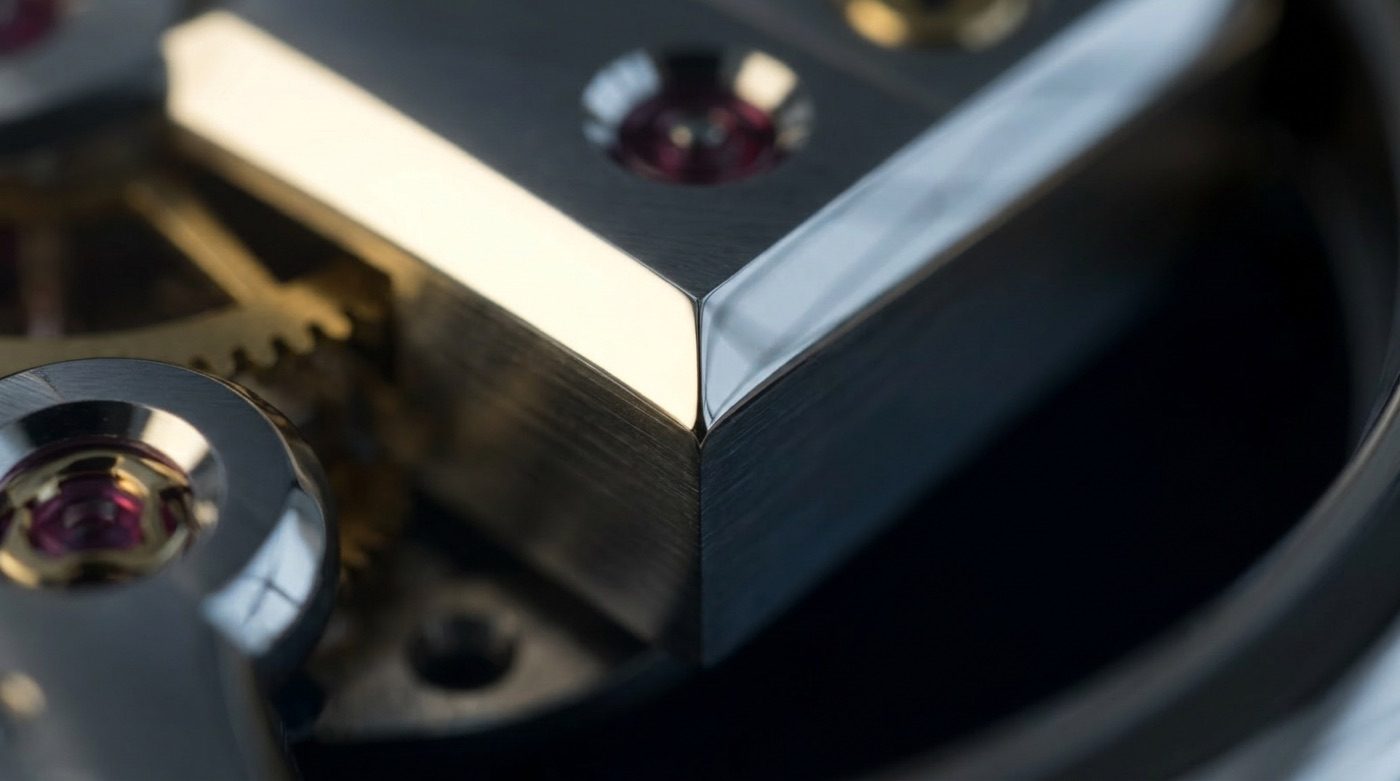
At the apex of the market, true independents such as Philippe Dufour and Kari Voutilainen have taken a different route. They reject corporate or collective seals entirely, relying instead on the unmistakable presence of pure hand-finishing, such as Dufour’s signature rounded interior angles or Voutilainen’s natural-shine hand-cut bridges, as their own sovereign signatures of unalienated labor. For collectors, these pieces represent the ultimate expression of personal mastery, where the absence of any external seal becomes the most powerful statement of all.
Tom Bolt highlights George Daniels as a defining figure in this tradition. Daniels chose to enhance traditional watchmaking rather than disrupt it — a lineage now carried forward by his apprentice, Roger Smith, in direct continuation from Abraham-Louis Breguet. Daniels is widely considered to have been the greatest watchmaker of the modern era. At the celebrated Sotheby’s sale of his estate in 2012, his Millennium-series wristwatches realised around £145,000; today standard examples trade between £440,000 and £520,000, and the unique Daniels-and-Smith co-signed example reached CHF 2.18 million at auction in 2024. Daniels also invented the co-axial escapement: a near-lubricant-free movement requiring far less servicing than its conventional peers. Patek Philippe had once considered acquiring the rights; the escapement was ultimately sold to Omega, who use it to this day and stamp ‘Co-Axial’ on the dials of their watches — much as Rolex still stamps ‘chronometer’ on theirs.
Aristocratic vs. Meritocratic Sovereignty
These varied approaches demonstrate that brand sovereignty in horology does not require a complete break from tradition. Some houses choose to transcend the system, others to elevate it from within, and a few to operate entirely outside it. In each case, the decision reflects a deliberate strategy for controlling quality, narrative, and long-term value. For modern collectors, the choice of seal (or the deliberate absence of one) serves as a clear signal of how a brand chooses to compete and what kind of excellence it seeks to represent.
In the 2026 market, these seals provide different signals to the investor. The Patek Philippe Seal represents inherited trust, relying on the brand’s 180-year history and its refusal to answer to any external authority. It is an aesthetic and philosophical seal. The METAS and Rolex Superlative seals represent proven competence, laboratory mandates that offer empirical proof that the watch can survive the magnetic and physical stresses of the 21st century.
The laboratory empire has ensured that even mass-produced luxury watches now perform at levels that were technically impossible during the guild era. While Patek Philippe manages the meaning of the watch, Rolex and Omega have mastered the information of the machine. The choice between these standards is ultimately a choice between different forms of sovereignty: one rooted in historic self-definition, the other in verifiable, independent performance. Both approaches reinforce the watch’s role as a high-density, portable store of value in an increasingly complex financial landscape.
Brand Psychology and Power Dynamics
The evolution of seals reflects a clear shift in power from collective authority to brand-controlled standards. Patek’s 2009 defection was a masterstroke of vertical integration. By creating its own Seal, Patek turned certification into a private language that only it could speak fluently. This reinforced the brand’s core positioning as the guardian of generational value. Rolex and Omega used a different strategy: they retained independent baselines (COSC) and layered proprietary testing to create recognizable upgrades (the green Superlative seal and METAS Master Chronometer). This approach allowed them to benefit from external credibility while still owning the narrative of superior performance. Vacheron Constantin and Audemars Piguet maintained participation in the Geneva Seal, leveraging its historic prestige while applying internal rigor to ensure their pieces met or exceeded the standard.
These choices illustrate how brands now manage their markets. Proprietary seals create exclusivity and protect long-term value by setting standards that only the originating house can consistently meet. Participation in the Geneva Seal offers historic credibility and a collective badge of excellence, but it requires compliance with external rules. In both cases, the goal is the same: to turn certification into a tool that supports secondary-market stability and justifies premium pricing.
What This Signals to Modern Collectors
For today’s collectors, seals are no longer simply marks of quality; they are signifiers of a brand’s strategic maturity. A Patek Seal watch indicates that the house has taken full control of its quality narrative, prioritizing generational reliability over external validation. A Rolex Superlative Chronometer or Omega METAS piece signals confidence in performance that has been verified beyond the minimum industry standard. A Vacheron or Audemars Piguet bearing the Geneva Seal signals pride in belonging to Geneva’s historic tradition while delivering the brand’s own distinctive excellence. A useful analogy: most drivers will rarely exceed 85 mph in a car capable of 200 mph, yet capability matters — one knows one could, if one chose. The same is true through a watchmaker’s eyeglass: most collectors examining a movement will only register the rotor swinging round with some fancy engraving on it, and conclude that this is amazing. Since COVID, sadly, the same observation increasingly applies to a worrying number of newbie watch dealers.
In an institutional market, these seals function as shorthand for long-term value retention. They tell wealth managers that the watch has been built and certified to standards designed to preserve capital. Collectors who understand this evolution recognize that the watch on the wrist is not merely a timepiece. It is a statement of how the brand chooses to compete, and a quiet confirmation that the asset has been engineered for stability in a volatile world. In the end, the evolution of mechanical watch seals shows that the brands that control their own certification control their own destiny. The collector who masters these distinctions does not simply own a watch; he owns a position in the market that has been deliberately designed to endure.
The Modern Regime: Secondary Market Velocity (SMV) as the Ultimate Audit
By 2026, the market has entered the era of market trust. Traditional certification seals have been relegated to supporting roles, while secondary market velocity, the speed and stability with which an asset can be liquidated, has become the primary metric of a successful timepiece. The different certification strategies now serve as financial signals that directly influence value retention and liquidity.
Morgan Stanley's Edouard Aubin of Morgan Stanley encapsulates this transition:
"In a disciplined investment sector, the only Seal of Approval that carries weight with a family office is the market’s refusal to let the price drop. When a watch retains 140% of its value over a five-year cycle, it has been 'certified' by the global collective intelligence of the market. This is a far more rigorous audit than any guild inspection of a movement bridge."
Patek Philippe’s proprietary Seal functions as the ultimate private standard. Rolex and Omega pursue a layered approach that combines independent baselines with proprietary upgrades. Vacheron Constantin and Audemars Piguet maintain participation in the Geneva Seal as a badge of historic prestige while applying their own internal controls.
In every case, these seals inform the financial value assigned to the watch. Proprietary or layered standards reassure wealth managers that the asset has been engineered for long-term performance and liquidity. They function as shorthand for capital preservation, allowing family offices to allocate with confidence in a market where provenance, serviceability, and resale velocity determine real-world returns. The watch is no longer valued solely by what is engraved on the movement. It is valued by the market’s collective judgment of its ability to hold and grow wealth across time. For the serious investor, the seal on the watch is the final confirmation that the asset has been built not just to be owned, but to endure.